
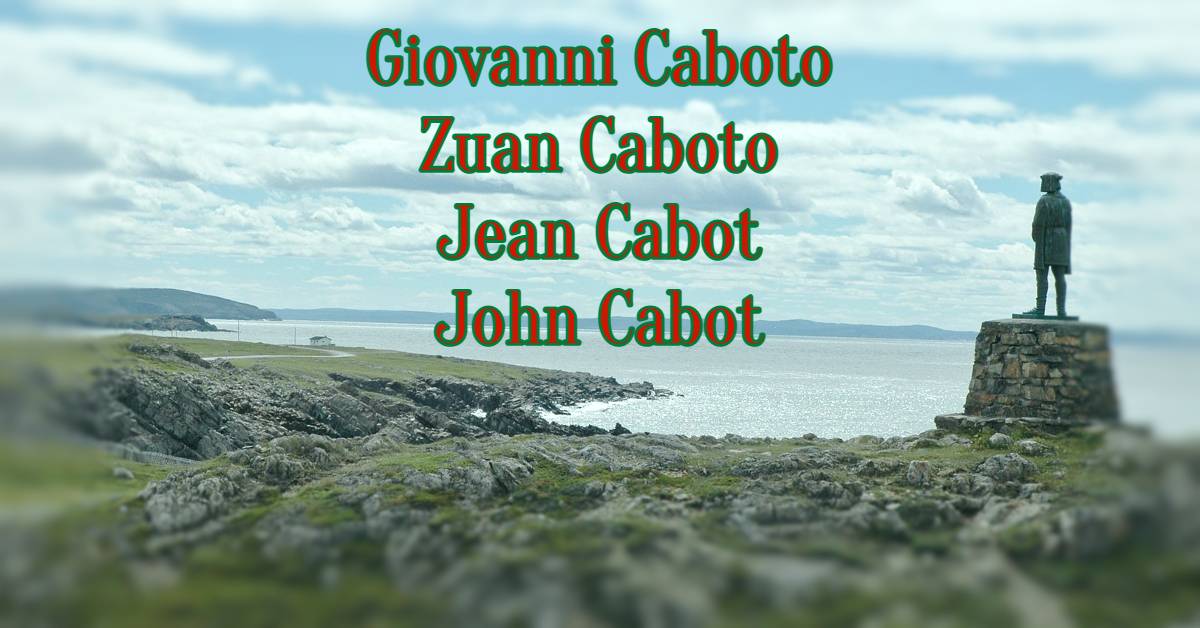
John Cabot, also known as Giovanni Caboto in Italian, was an Italian navigator and explorer who is best known for his voyages to North America in the late 15th century. He was born in Genoa, Italy, around 1450, and little is known about his early life. Other records suggest he was born in Gaeta (in the Province of Latina).
In Italian, “Caboto” means “coastal seaman,” and it was a common name given to sailors and navigators at the time.
But Giovanni Caboto went by different names depending on the language. He used “Zuan Caboto” in Venetian, “Jean Cabot” in French, and “John Cabot” in English. This practice of adapting names to the local language was common in Europe at the time. In fact, in Venice, Cabot himself signed his name as “Zuan Chabotto,” using a Venetian version of the name.
In the late 15th century, Cabot eventually moved to Venice, where he became a citizen and started working as a navigator. There he married a Venetian woman whose name was Mattea. His ship, the “Matthew” was almost certainly named after her.
Cabot was a lifelong friend of Christopher Columbus who also came from Italy. In 1493, Cabot learned of his friend’s voyage of discovery that had taken him to the West Indies, thinking that he had found a westward route to India.
In 1495, he moved to England, where he received funding from King Henry VII to explore the New World. Cabot’s first voyage to North America took place in 1497, when he sailed across the Atlantic Ocean with a small crew and reached the coast of Newfoundland, Canada.
He claimed the land for England and named it “New Founde Lande.” Cabot made a second voyage the following year, but its exact location and outcome are uncertain.
Although Cabot’s voyages did not lead to significant colonization or settlement, they were important in the history of exploration and discovery. Cabot’s discoveries helped to establish English claims in North America and paved the way for future explorers, including Christopher Columbus and Amerigo Vespucci.
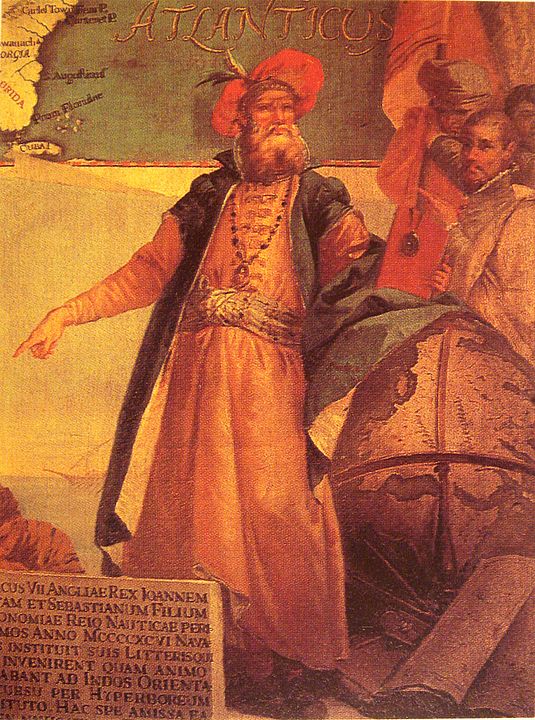
Cabot is also remembered for his ambition and determination, which allowed him to overcome the challenges of ocean navigation and make significant contributions to European exploration. Despite his Italian heritage, Cabot’s voyages are an important part of English and North American history, and his legacy continues to inspire new generations of explorers and adventurers.
Sadly, John Cabot and his fleet did not return from his second expedition. Not much is known of what happened to him. He may have perished in a storm, or hit an iceberg, or maybe even reached the new continent and died at the hands of Indians, or more likely, the Spanish.
Although we do not know for certain what happened to Cabot’s second voyage, we can credit John Cabot for taking the English language to North America, and for being the first explorer to reach the mainland of North America under the English flag.