
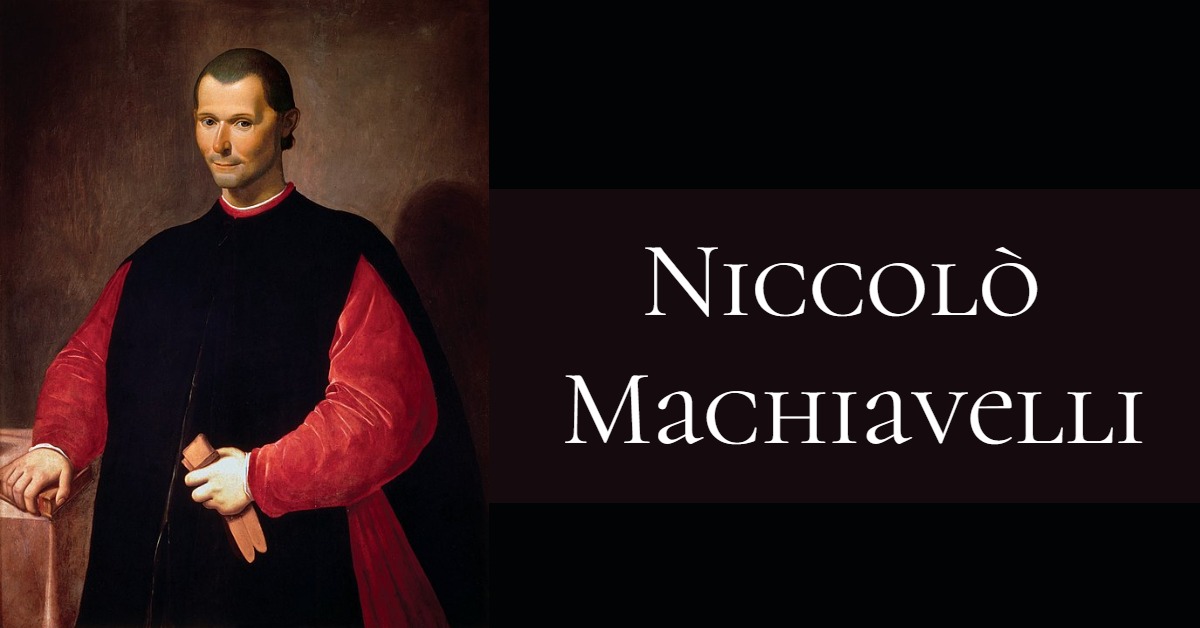
Niccolò Machiavelli (1469-1527) was an Italian Renaissance philosopher, writer, and politician. He was born in Florence and served as a diplomat and advisor to the Florentine Republic for many years, but he was eventually imprisoned and exiled after the city was taken over by the Medici family.
Machiavelli is best known for his political treatise, The Prince, which he wrote during his exile in the early 16th century. The book is a practical guide to political power, offering advice on how to gain and maintain control over a state, with a particular focus on the use of force and deception.
The Prince is often seen as a controversial and even immoral book, as Machiavelli’s advice seems to promote the use of any means necessary to achieve one’s goals. He famously argued that a ruler should be feared rather than loved, and that the ends justify the means, even if that means committing acts of cruelty or injustice.
Despite its reputation, The Prince has had a lasting impact on political theory and has been influential in shaping modern political thinking. Machiavelli’s ideas have been interpreted in many different ways over the years, and his work has been both praised and condemned by various scholars and politicians.
Much of what he taught could be considered good advice for any type of leader, from the war room to the boardroom. For example: Rulers should avoid being hated by the population and they should shun flatterers. Their have been some recent politicians who would have done well to heed this advice.
He also was part of a movement during the Renaissance to divorce learning from religion and religiously-derived morality. Unfortunately, in the U.S. today we seem to be reverting to the morality of the Dark Ages where “religiously-derived morality” enters into the discourse on public education.
In addition to The Prince, Machiavelli wrote many other works on politics, history, and philosophy, including Discourses on Livy, The Art of War, and The History of Florence. His legacy as a political thinker and writer continues to be debated and discussed to this day.